Showing posts with label The Reformation. Show all posts

Tuesday, August 25, 2026

Lex Anteinternet: Ecclesia militans. On the use of the word "Christian".

Lex Anteinternet: Ecclesia militans. On the use of the word "Christ...: Ἰησοῦς εἰς τὰ μέρη Καισαρείας τῆς Φιλίππου ἠρώτα τοὺς μαθητὰς αὐτοῦ λέγων· Τίνα λέγουσιν οἱ ἄνθρωποι εἶναι τὸν υἱὸν τοῦ ἀνθρώπου;  οἱ δὲ εἶπ...

Ecclesia militans. On the use of the word "Christian".


Ἰησοῦς εἰς τὰ μέρη Καισαρείας τῆς Φιλίππου ἠρώτα τοὺς μαθητὰς αὐτοῦ λέγων· Τίνα λέγουσιν οἱ ἄνθρωποι εἶναι τὸν υἱὸν τοῦ ἀνθρώπου; 
οἱ δὲ εἶπαν· Οἱ μὲν Ἰωάννην τὸν βαπτιστήν, ἄλλοι δὲ Ἠλίαν, ἕτεροι δὲ Ἱερεμίαν ἢ ἕνα τῶν προφητῶν. 
λέγει αὐτοῖς· Ὑμεῖς δὲ τίνα με λέγετε εἶναι; 
ἀποκριθεὶς δὲ Σίμων Πέτρος εἶπεν· Σὺ εἶ ὁ Χριστὸς ὁ υἱὸς τοῦ θεοῦ ζῶντος. 
ἀποκριθεὶς δὲ ὁ Ἰησοῦς εἶπεν αὐτῷ· Μακάριος εἶ, Σίμων Βαριωνᾶ, ὅτι σὰρξ καὶ αἷμα οὐκ ἀπεκάλυψεν σοὶ ἀλλ' ὁ πατήρ μου ὁ ἐν τοῖς οὐρανοῖς. 
κἀγὼ δὲ σοὶ λέγω ὅτι σὺ εἶ Πέτρος, καὶ ἐπὶ ταύτῃ τῇ πέτρᾳ οἰκοδομήσω μου τὴν ἐκκλησίαν, καὶ πύλαι ᾅδου οὐ κατισχύσουσιν αὐτῆς. 
δώσω σοι τὰς κλεῖδας τῆς βασιλείας τῶν οὐρανῶν, καὶ ὃ ἐὰν δήσῃς ἐπὶ τῆς γῆς ἔσται δεδεμένον ἐν τοῖς οὐρανοῖς, καὶ ὃ ἐὰν λύσῃς ἐπὶ τῆς γῆς ἔσται λελυμένον ἐν τοῖς οὐρανοῖς. 
τότε διεστείλατο τοῖς μαθηταῖς ἵνα μηδενὶ εἴπωσιν ὅτι αὐτός ἐστιν ὁ Χριστός.

_____________________________________________ 

Jesus went into the region of Caesarea Philippi and

he asked his disciples,

"Who do people say that the Son of Man is?" 

They replied, "Some say John the Baptist, others Elijah,

still others Jeremiah or one of the prophets." 

He said to them, "But who do you say that I am?" 

Simon Peter said in reply,

"You are the Christ, the Son of the living God." 

Jesus said to him in reply,

"Blessed are you, Simon son of Jonah. 

For flesh and blood has not revealed this to you, but my heavenly Father. 

And so I say to you, you are Peter,

and upon this rock I will build my church,

and the gates of the netherworld shall not prevail against it. 

I will give you the keys to the kingdom of heaven. 

Whatever you bind on earth shall be bound in heaven;

and whatever you loose on earth shall be loosed in heaven." 

Then he strictly ordered his disciples

to tell no one that he was the Christ.

Matthew 16:13-20

The other day I saw an item on Blue Sky posted by Atticus Finch of Georgia which linked in an article on "post truth Christianity".  It brought into focus something that's really been increasingly bothering me in recent years. . .well more specifically the Trump era.

Then, as an example of synchronicity, I was speaking with a close relative of mine who absolutely exploded on the same topic.  I didn't bring it up.  That person did.

Then, this past Sunday, Matthew 16:13-20 was the Gospel reading.

Yesterday there was a post on Twitter in which an Orthodox Christian reacted the same way I am here.

So here's what that topic is.

When the term "Christian" is used recently, it tends to refer to "Christian" support of Donald Trump.  And, hence the error.

While you can find individuals of any stripe of Christianity and religion supporting Trump, in reality, the Christians that support Trump are, for the most part, and most significantly, Evangelical Christians.  Yes, you can find a Catholic or Orthodox cleric here and there that does.1 And, in fairness, you can find Hindus, Muslims, Jews, Atheists, and any number of other sets of beliefs with individuals who support Trump.2  But the real core of the "Christian" support of Trump comes from a slice of the Evangelical world, and just a slice at that.

The "post truth" comment is what really got my attention.  

American Catholics generally try to make nice with other Christian denominations, although less so in the post 1960 world than we used to, but lots of Protestants don't try to make nice with us.  So we have tended, post 1960, to keep some of our weltanschauung to ourselves.3 So much so, in fact, that we've allowed the Protestantization of lots of Catholics, who now think like Protestants.  While there are exceptions, when you find a real pro Trump Catholic, they probably have a Protestant world outlook and don't realize it.

So, to post truth.

Protestants have been "post truth" for about five hundred years.  Protestants outside the mainline Protestant churches are very post truth.

We've known that all along.

Starting with science, Catholics are in favor of science, not against it.  The entire Big Bang Theory is our deal.  We're not opposed to the theory of evolution.  People evolved from earlier primates.  The world is not 5,000 years old.  It's billions of years old.

We know that. We not only accept that (most of us) but we rejoice in it.  We don't feel that God has to fit within our limited human imagination.

Our basic view is that God gave us the intellect to explore his creation.  So far, we haven't found one darned thing that causes us to question our faith.  Moreover, if you belong to a religion that requires you do deny science, something about it is deeply wrong, even false.

So, yeah, there's a lot of "post truth" Christians out there, and they're coming from the Evangelical end of the pool.  If you find a Catholic holding those views, they've likely dipped their toes in it.  Some are swimming really deep in it.

And here's another thing, which my relative was exploding on.

Catholics have taken a beating for decades simply for being Catholic.  It's okay, Christ told us that we would.  In the US we get, from Evangelicals, the question of "are you Christian?", with the reply from them often being that if we're Catholic, we're not Christian.

Well, I guess when people had access only to their friends and neighbors and a pastor who had been miseducated on these topics, that was not only to be expected but semi tolerable, but it isn't any more.

We are the original Christians.

Πάντες τῷ ἐπισκόπῳ ἀκολουθεῖτε, ὡς Ἰησοῦς Χριστὸς τῷ πατρί, καὶ τῷ πρεσβυτερίῳ ὡς τοῖς ἀποστόλοις. τοὺς δὲ διακόνους ἐντρέπεσθε ὡς θεοῦ ἐντολήν. μηδεὶς χωρὶς τοῦ ἐπισκόπου τι πρασσέτω τῶν ἀνηκόντων εἰς τὴν ἐκκλησίαν. ἐκείνη βεβαία εὐχαριστία ἡγείσθω, ἡ ὑπὸ ἐπίσκοπον οὖσα ἢ ᾧ ἄν αὐτὸς ἐπιτρέψῃ.

ὅπου ἄν φανῇ ὁ ἐπίσκοπος, ἐκεῖ τὸ πλῆθος ἤτω, ὥσπερ ὅπου ἄν ᾖ Ἰησοῦς Χριστός, ἐκεῖ ἡ καθολικὴ ἐκκλησία. οὐκ ἐξόν ἐστιν χωρὶς τοῦ ἐπισκόπου οὔτε βαπτίζειν οὔτε ἀγάπην ποιεῖν· ἀλλ' ὃ ἄν ἐκεῖνος δοκιμάσῃ, τοῦτο καὶ τῷ θεῷ εὐάρεστον, ἵνα ἀσφαλὲς ᾖ καὶ βέβαιον πᾶν ὃ πράσσετε.

See that you all follow the bishop, even as Jesus Christ does the Father, and the presbytery as you would the apostles; and reverence the deacons, as being the institution of God. Let no man do anything connected with the Church without the bishop. Let that be deemed a proper Eucharist, which is [administered] either by the bishop, or by one to whom he has entrusted it. Wherever the bishop shall appear, there let the multitude [of the people] also be; even as, wherever Jesus Christ is, there is the Catholic Church. It is not lawful without the bishop either to baptize or to celebrate a love-feast; but whatsoever he shall approve of, that is also pleasing to God, so that everything that is done may be secure and valid.

 The Epistle of Ignatius, 33 to 108, to the Smyrnaeans, written in 107.

Nobody with any religious education of a serious nature denies this whatsoever.  John Calvin and Martin Luther didn't deny that.  The only religion that can raise a hand on it are the Orthodox Churches, and they don't deny that we're first, they just take they position that they are also first, and that actually makes some sense.  There's a schism between the Orthodox and the Catholic Church, but we all go back to day one.  That's not to make light of the schism, but it's significant in that we all know that our churches go directly back to the moment Christ founded the church.

No Protestant Church can claim that and maintain the claim, although some try to.  Those that do have to acknowledge that the Catholic Church is first, and try to argue that they're related closely enough to it in order to make the same claim.  That is the claim of the Methodist and Anglican Churches, for example.

All of which brings up the next point.  Any Protestant Church that claims to be authentically Christian that doesn't have a good explanation for this is in real trouble.  Extra ecclesiam nulla salus.  You can't be a Protestant Christian and just claim you are like the original Christian communities.  Take a look at what St. Ignatius of Antioch wrote in 107.  St. John the Apostle had only been dead for about seven years when he wrote that.  You aren't like the original Christians if you don't look like the Catholic Church, with Bishops, priests, and deacons.  You can't claim there was a great falling away, a Great Apostasy, early on.  There wasn't. We have all the books and we know that there wasn't.  Ignorance, on this topic, is your only defense (and now that you've read that, you don't have that).

Indeed, if you aren't Catholic, you need to have a really good explanation for it, and there really isn't one.

So, here's the thing, now that Trump is in office and flaming out we're hearing from the same group of people who said that we're not Christians that we need to throw in with them and support Trump.

We do not.

Trump is not a religious man himself, and there's very little evidence that he has any deeply held religious beliefs, if any religious believes at all.  Personally, he's a study on certain of the Seven Deadly Sins.  He's a warning on the love of money.  He's a serial polygamist.  He's a liar.

He's an evil man.

Throwing in with evil is never justified save for the principle of Double Effect.  I.e., my tipping the pizza delivery guy may have just funded the purchase of illegal drugs, but that was not the intended effect.  My working for the post office may mean that I'm delivering pornography (well, I guess that probably doesn't happen anymore in the age of the Internet, but you get the point), but that is incidental to the occupation, not its purpose.

But this obviously crosses over a line, somewhere.  If, for example, I were a German and this was 1940, a hatred of Bolshevism would not justify joining the SS.

And that's sort of where we are at now, in a way.

Some thinking Catholics supported Trump either openly or quietly with their vote, earlier, as they were opposed to abortion and the weirdness of social trends in sex and gender in general.  Well, the Supreme Court has reversed Roe v. Wade and the transgenderism thing is jumping the shark, if it hasn't already jumped it.  Indeed, in Europe, where it first appeared, it's in major retreat.  Obergefell hasn't been reversed, but there's been no case that presented an opportunity for htat to occur, probably because conservatives fear to advance one.

Irish born immigrant  Patrick J. Sullivan.  He became wealthy raising sheep in Carbon County and relocated to Casper in 1892, when he went into other enterprises.  He was a member of the U.S. House of Representatives from 1894 to 1896 and from 1898 to 1900, Mayor of Casper from 1897 until 1899, Senator from Wyoming from 1929 to 1930, appointed to fill the seat left by the death of Francis E. Warren.  While he was a practicing Catholic, he tended to deemphasize it at the time as it was damaging to his public standing, something that was the case up until Kennedy ran for President.

Now, mind you, I'm not telling you who to vote for, what I'm suggesting is whom you do not support, or to put it another way, what you should not get wrapped up in.

The MAGA movement isn't justifiable from a Christian perspective at this point, if it ever was.  It's weirdly nationalistic and in many instances engaged in idol worship in the form of fanatic adoration of Donald Trump, even somewhat crediting him with supernatural powers in "always being right".   The administration has committed the military to actions which are outright murderous in the Caribbean and South American Pacific.  It's waging an unjust and illegal war.  It creeps right up on being racist and some of its members hold beliefs that are deeply antithetical to Apostolic Christianity.  Some of the people in it are deeply evil, and all of them are deeply compromised.

Vote for those who you will, and in keeping with your conscience.  But some things to remember.  

Trump is not any kind of real Christian.  Attaching Christianity to this administration is going to have a massive negative impact as it falls.  It is in fact already doing so.  There are people in the secular world who truly believe that its the "Christians" who are supporting Trump, and that people like Mike Johnson and Mike Lee are posters for Christians. They are not.4  The fact that they're being made posters for Christianity means that they, and Trump, are driving thinking people away from the Church.  When Trump falls, he's going to take a lot of Evangelical Christianity down with him, just as the fall of the Confederacy during the Civil War heavily damaged the Episcopal Church in the South.

Catholics, we don't want to be part of that, and there's no reason that we should be.

Ecclesia militans.5

Footnotes

1.  A prominent example of that is Bishop Barron.  Bishop Barron shows up on occasion at Trump related religious gatherings and he servers on President Trump’s Presidential Religious Liberty Commission.

I'm not here to criticize a Bishop and I don't really understand what the Bishop is doing, or what the Commission does.  Nor have I followed it.  I'm just noting this.  Cardinal Timothy Dolan, who is well liked, also serves on it.  Archbishop Elpidophoros of America and Bishop Salvatore Cordileone are advisory members.

2.  Stephen Miller, who just the other day accused the Protestant seminary student who is competing for a Senate seat from Texas of not being Christian, is Jewish.

3.  We can trace this to the 1960 election of John F. Kennedy, as we have before, who basically promised to only be Catholic on Sundays.

Kennedy was a horrible example of a Catholic to start with.  But his election was such a thrill to American Catholics that a large number of them followed him into the same easy belief, which has been a disaster for a generation of American Catholics that we're only now just really beginning to recover from.

4.  Johnson is a Southern Baptist, which is presently the largest Protestant denomination in the US, having about 12.3M members.  In contrast the number of Catholics in the US is around 70M.  A person needs to keep in mind that not all Catholics are observant, but then neither are all Baptists.  Anyhow, Johnson also seems to adhere to the New Apostolic Reformation and sincerely believe that he's been licensed to lie in order to bring about a Protestant state.  Lee is a Mormon and therefore not a Christian at all.

5.  This huge icon is a Russian Orthodox icon.

Sunday, February 1, 2026

Churches of the West: Claiming the mantle of Christ in politics. Addressing politicians in desperate times, part 3.

Churches of the West: Claiming the mantle of Christ in politics. Address...: Ave Maria, gratia plena, Dominus tecum. Benedicta tu in mulieribus, et benedictus fructus ventris tui, Iesus. Sancta Maria, Mater Dei, ora p...

Claiming the mantle of Christ in politics. Addressing politicians in desperate times, part 2.

Ave Maria, gratia plena,
Dominus tecum.
Benedicta tu in mulieribus,
et benedictus fructus ventris tui, Iesus.
Sancta Maria, Mater Dei,
ora pro nobis peccatoribus,
nunc et in hora mortis nostrae. Amen.

This series was kicked off on a companion blog, and followed up upon in another one that has a more limited focus.  That's why we're posting this one here.  I.e., we acknowledge that questions that are important to hunters, fishermen, campers, etc., may not be to the sincerely religious.*

I fear, gentle reader, that this will have a rather long winded introduction, but there's no real way to avoid that.

More than any other era in my lifetime, religion is in the public sphere.  In Wyoming, the least religious state in the country, decades went by in which politicians never openly stated anything about their faith.  I knew very sincere Catholic politicians who never mentioned that in a race, or while in office.1 The same is true of two deeply Mormon politicians I know.  If you knew them, you knew that they were Mormons, but they never mentioned it even once in their campaigns.

The same was true of Congressional candidates.  There were longserving Congressmen from Wyoming whom I could not tell you anything about their religions.  I assume that they were Christians, but it's just an assumption. I'm sure I could look it up, but it's not something you automatically knew.

Well, those days are over, and they're over because radical Calvinists of the New Apostolic Reformation are waging a holy war on American culture, and by extension, effectively on other faiths, including the main of the  Christian faith.  They're franky fairly open about it.  


As part of this, a lot of politicians now wrap themselves in the mantle or religion, claiming Christ and Christianity, and directly interjecting questions of faith and morals into their politics.  Prime examples today are people like Mike Johnson, who is some sort of Evangelical Christian and who has the Christian Nationalist Pinetree Flag outside of his office.The election of Donald Trump brought to the forefront Christian Nationalist and National Conservatives, movements that were around before Trump but who see Trump as their once in a millenium opportunity.  

In that group, moreover, there are two distinct camps.  One one hand, you have National Conservatives, a movement defined by people like Patrick Dineen and Rod Dreher and who are often Apostolic Christians looking back basically to the 19th Century.  They distrust democracy entirely, and therefore espouse a sort of democracy that can only exist within cultural guiderails.  Adherents to their views who are in the Administration or who have close influences on it are J. D. Vance and Kevin Roberts.3 

These people are influential, but not as much as the second group.

The second group are radical Evangelicals who are often part of the New Apostolic Reformation.  They really only barely tolerate Apostolic Christians and some of them, who are pretty ignorant as a rule on Church history and the early history of the Church, do not regard Apostolic Christians, particularly Catholics, as Christians at all.  The standard bearer for people of this mindset was Charlie Kirk, although he seemed to have been evolving steadily towards Apostolic Christianity.  Paula White, whom most Apostolic Christians and Mainline Protestants would fine to be a little weird, is the "faith advisor" from this camp who is very close to the Trump Administration.  Franklin Graham seems to be in this circle as well.4

The NAR people believe in a theology in which the United States sort of has a status roughly analogous to Israel in the Old Testament.  That is, they believe the US has a Devine mission.  They're serious about it, and they see the country as a Calvinist country, which is distinctly different from seeing it as a Christian country.  The U.S. is definitely a Protestant Country, even though many Americans don't' realize that, and Puritanism still influences it heavily.  Teh NAR people would bring Puritanism roaring back.

Christianity has had splits and different views right from the onset.  There were early heracies, of course, but there were also local expressions of Catholicism that gave rise to different rights.  World events separated the churches from each other, and some of the divisions meant that distant branches of the Church spent long periods in isolation from other Christians.  I note that to counter what is so often generally supposed, that being that Christianity was completely uniform at first.  That was never true.  Christians could certainly recognize each other, and even when long separated Churches came back into exposure with the main they often instantly recognized that they were in contact with other Apostolic Christians, but there were local different.  Such differences gave rise to the Great Schism and then, more radically, to the Reformation.

I don't note all of this to try to set out a history of the Church, but to further note here a set of additional divides.

The Catholic Church has divides between orthodox, traditional, radically traditional, and liberal, with the latter camp really falling rapidly away.  We won't deal much with the liberal here, as its basically a Baby Boom thing and a product of a misunderstanding of Vatican II.  Over time, orthodox thinking has really returned to the Church, to the relief of almost all, and presently orthodoxy is the mainstream of the Catholic demographic, with liberalism sort of an old Priest and old Bishop hold out sort of thing.  Orthodox Catholics take their Faith seriously, and look inward at the Church, rather than expect all that much of society as rule.  Trads take that one step further, reincorporating some of the things that disappeared with the "spirt of Vatican II".  Rad Trads go even further than that, with hostility towards the modern Church.

Politically, sincere Catholics are hard to peg down.  Even the Trump administration gives us a glimpse of that.  I doubt that Rubio joins Vance for Mass, even though they both go each Sunday and Holy Days.  Anyhow, Catholics that aren't protestantized, and many are protestantized, tend towards the middle of things politically, being very conservative on most social issues involving life or gender, but potentially all over the map on other issues, save for one thing. They can't be "America First" or any nation first on anything.  They hold Christ first and everything else second, some things a distant second.  There's no such thing, for educated Catholics, as an "American church".  In that, they hold the same view as St. Thomas More as expressed in his last words before his martyrdom:

I die the king's good servant, but God's first.

St. Thomas More before his execution on July 6, 1535.

The Orthodox are much the same, save for the fact that there really aren't "liberal" Orthodox, although there certainly are unobservant ones due to a loose understanding of mortal sin in Orthodoxy. The interesting thing here is that the Orthodox, who are very traditional on things, have been experiencing an unanticipated influx into their ranks which is changing the Orthodox Churches.  

For decades, Orthodox Churches were ethnic in a way that Catholic Churches could not be.  Now, many people will note that somebody was "Polish Catholic" or "Irish Catholic", and indeed that meant and means something.  But at the time at which such phrases meant the most, it was also the case that the Latin Rite of the Catholic Church said its Masses in Latin, and that meant that the Church was always very much International in nature.  Any Catholic Church anywhere, no matter how ethnic its parishioners may have been, always had members who were converts or members of other ethnicities, in the United States as well as elsewhere, and CAtholics were always conscience of that.  Orthodox Churches, however, were often extremely ethnic.

The Eastern Rites of the Catholic Church and the Orthodox have, however, seen quite the influx of others in recent decades.  In the case of the Eastern Rites of the Catholic Church, the influx started off with Trad Catholics who were seeking a traditional service. That may have continued on, but frankly at the present time the entire Latin Rite is much more traditional than it was even fifteen years ago.  Put another way, if you are seeking the traditional in the Latin Rite, it's not very hard to find it.5

But some Protestants who are fleeing their mainline Protestant Churches as those churches decline, and moreover as they've embraced liberalism, can't bring themselves to go all the way across the Tiber.  Many, many do, but some do not.  Some of those swim the metaphorical Bosphorus instead.

As they've done that they've brought a much needed widening to the Orthodox Churches, although not always in a way that ethnic parishioners have always welcomed.  Churches that were Greek Orthodox or Russian Orthodox have started to become American Orthodox, both figurately and early literally.

Holy Apostles Orthodox Christian Church, Cheyenne Wyoming.

In Protestantism, we see some similar things going on.

In the Mainline Protestant Churches we've seen some that have gravitated towards liberalism, and empty pews.  Usually in the same denomination there's a pull away back toward their Catholic origin.  One of the most Catholic wedding homilies I've ever heard, for example, was delivered by a Lutheran pastor.  It was blisteringly orthodox. Entire groups of the Anglican Communion had waded into the middle of the Tiber and waded there.

As that has happened, liberal branches of Mainline Protestant Churches have simply started to die.  Indeed, the entire Protestant Reformation is pretty clearly in its death throes.  The Catholic Church in much of the ground captured by rebels of the Reformation is gaining ground, including in the United States and United Kingdom.  In the same territory, the churches of the Reformation are dying away.

As that happens, however, the radical Reformation churches, those that were the reformation of the Reformation, have held on in their own unique ways.  In some instances, they've done so through having a very lightweight adherence to Christ's message.  Entire branches of Protestantism don't take seriously much of Christ's message on multiple things, the sanctity of marriage, and its enduring nature, in particular.  Most Protestant churches have come around to being completely comfortable with divorce and remarriage, and even multiple mirages, as well as birth control and living together outside of marriage.  

While that's happened, on the far political right we now have a revival of hardcore Calvinism, the sort of Calvinism that's really intolerant of anything else.  And that's the branch of Protestantism that has the most influence on the Second Trump administration.  It's basically at war with American culture.

A Pastor's Warning: We're Not in a Civil War, But a Christian Nationalist Holy War—And They Must Not Win.

What those who are religious, or who take religion seriously must do, or even those who simply take the topic seriously must do, is to ask candidates a series of questions, or ask yourself a series.  We'll start off, after this very long introduction, with those.

1.  Does a candidate who clothes himself in the mantle of religion, in any fashion, live according to the tenants of the religion?

We are seeing a lot of claims by politicians now days that they are religious, or that perhaps some other candidate is.  But what's the evidence for this?

The prime example is frankly Donald Trump. Claims that he is a Godly man are simply absurd.  The claims that he's some sort of Cyrus the Great are less absurd, but still absurd.  He's a genuinely bad man.

You really can't practice serial polygamy and claim that you are some kind of adherent Christian. And while all things are possible with God, having extreme wealth and being focused on it likewise make a person quite unlikely to be any sort of sincere Christian.

I'd start in part with Trump here, not because Trump claims to be a sincere Christian, although he comes pretty close, but because of those who seek to wrap him in the mantle of Christianity.  It's simply not credible, and people who assert that seriously shouldn't be taken seriously.  In contrast, thsoe who take a more cynical view, that they're advancing some kind of Christianity through an irreligious man, are more credible.

This question is a very sincere one.  We have, right now, J. D. Vance, a Catholic, on record supporting IFV, which is condemned by the Church.  How can he do that?  And  he's certainly not the only Catholic politicians who has strayed massively from the tenants of the Faith.

But its not just Catholic politicians.  Plenty of Protestant politicians right now claim to be deeply religious, but are they?  If they are opently not living according to the tenants of their Faith, what is the reason?

2. What religion are they?

This may sound like an odd one, but right now there's a lot of politicians who cite "faith", or claim a relationship with God, or who broadly claim to be Christian, without saying what they really are.  If they make the open claim they need to be asked this question.

The reason is that there are significant differences in the world outlook of various Christian religions.  The Wyoming Freedom Caucus, for example, seems to be heavily influenced by NAR type views, which most Christians are not, and which most do not support.

What about Trump, again.  He was raised a Presbyterian but has disavowed that, interestingly, as an adult.  What is he?

On this, the answer "Christian" doesn't cut it except in the case of the non observant member of the American Civil Religion, who are just sort of vaguely aware that most people in the US are Christians and they are too.

3. Do they actually attend a Church?

There are politicians who might never attend a church. We don't know, for example, if Tammy Duckworth does.But we also know that Duckworth does not make her religion an issue.  Likewise, we mentioned the other day that one of conservative members of the legislature is Episcopalians, but he doesn't mention religion at all on his legislative biography.

It is not, we'd note, that we're encouraging people to be irreligious. Quite the contrary. But if a person makes being a "Christian" a banner in their campaign, what kind of Christianity do they espouse? The same would be true for any other religions. The new mayor of New York, for example, is a Muslim, but clearly of the branch of Islam, now rare in the Middle East, that was of the progressive tolerant variety.7

The long and the short of this is ,that if politician claim to be a devout member of "Fill In Church" here, but doesn't go, well, that says all you need to know about him.8

4. Do they adhere to the tenants of their religion?

This is a big one, and you are entitled to ask.

It's one thing for a person to say "I'm a ____________". But all religions  have the concept of a greater entity.  If a person claims, for example, to be a Muslim but slams down a fifth of Jim Beam every night, well. . . 

That is, of course, a bad example. But to give more concrete ones Joe Biden was often cited as a Catholic, but supported the seas of blood that abortion results in, as well as the biological abomination of transgenderism.  This might make more sense (well actually it wouldn't) if you did not claim to be part of a religion that condemns them, but if you do, it shows that you have weak moral character that you may betray for convenience.

Lest it seems like we are endorsing Republicans by default, Donald Trump, who claims sorme loose association with Christianity, is a moral sewer.

Vance has claimed Catholicism, but backs IVF, which the Church condemns.

But what about your local politician?  They may be ramrod straight claiming that they are a member of _______________, but do they live their lives that way? If they claim a faith, you have the right to ask, and demand that they do.  Indeed, part of the problem with modern politics is that politicians are allowed to claim a religion on a tribal, but not practice basis.

5. Have they changed religions?

Religious conversions can be sincere or insincere.  In contemporary American conversions for convenience are less common than they once were, but they still exist.

Something to consider here is that conversion from no religion into a religion, and then practicing it, indicates sincerity.  Also, conversion into a religion that carries they byproduct of contempt for conversion does as well.

For this reason, while I have lots of problems with J. D. Vance, I sincerely credit his conversion into Catholicism.  This isn't something that you do lightly, and it isn't like just showing up at a service.    To be a Catholic is to endure contempt.

I'll also note that as a Catholic, while I feel that joining a Protestant faith if you are a baptized Catholic endangers your soul, I'll credit sincerity with some who have done so.  Mike Pence, who was a baptized Catholic is sich an example. While I feel that his faith journey has been deluded, and I hoep for his return, I believe he's sincere.

On the other hand, a conversion that was one of convenience shows a defect in moral character.  Without naming names, I can cite one local politicians who had a Catholic education and marriage, and then became a Presbyterian when a marriage situation suited that.  He's probably about as sincere Presbyterian as he was a Catholic, but that's the point.  A person whose attachment to the existential is so thin has no attachment to anything that matters at all, as is exemplified by the person I mentioned, who went from middle of the road conservative, to conservative, to MAGA, all with a stern look as if he was paying any attention at all.

5.  Why are they citing their religion?

If they are, why?

There's only two possibilities. Either they think it really matters, or they think it matters to you. 

That's it.

If they think it matters to you, they're claiming a tribal affiliation, not a moral one, and that should be problematic.

6. Do they think that: 1) this is a Christian nation and 2) it should be a theocracy?

The answer matters.

This is a Christian nation.  People who say otherwise are fooling themselves.  More than that, this ia a Puritan nation, although that's dying before our eyes.9   Accepting one, without the other, is significant.

Truth be known, this country stopped being 100% Puritan about a week after the Plymouth Rock landing, but it's been a long haul.  It wasn't until the Kennedy election that Catholic's really became part of the country.  Things continue to evolve.

This being the case, the weltanchaung of the NAR is fundamentally adverse to American culture and, oddly enough, the American Civil Religion.  We're not going back, and we're not going back as the NAR is fundamentally wrong.  

We're headed in a new direction. That direction can be conservative, but the NAR doesn't reflectd Christian reality, or the message of Christ. 

7. Does the candidate advocate or excuse bad things?

It's one thing to be irreligious and advocate a bad thing.  It's another to be a Christian.

Invading countries and killing people outside of self dense if deeply immoral. 

Killing people, including the unborn, is gravely wrong.

I'd argue avoiding the natural result of human intercourse is as well.

Theft, including of lands, is immoral

Avaracie is immoral.

Right makes might has been a proven failure since day one. Our current President seems to have adopted it. Does your candidate"

8. Does their embrace of religion make you 100% comfortable?

This would depend upon the faith, of course, but basically if you are sitting behind the candidate at Mass and wondering, 'how can he?", well, ask him?

Footnotes

*Although we would argue that if you are not out enjoying and experiencing God's creation in nature, in some fashion, you should be.

1.  Highly successful sheep rancher and politician Patrick J. Sullivan, who was Irish born, and a Catholic in Natrona County, supposedly tried to keep his distance from being too publicly Catholic, although that would have been due to the outright hostility to Catholicism in the first half of the 20th Century.  He served one year, more or less, as Wyoming's U.S. Senator upon the death of Francis E. Warren.

The unrelated Gov. Mike Sullivan is a devout Catholic who was ambassador to Ireland under Bill Clinton.  While his Irish heritage was very well known, pretty much nothing was every said about it while he was in office.

2.  Johnson provides an interesting example of what we're discussing here, in that he's from Louisiana.  Louisianans will often sort of wrap themselves around a faux Cajun personality to outsiders, but there are really five cultures that are basically naive to the state, Cajun, Creole, Black Creole and Southern White.  Johnson is Southern White.  This is quite significant in that Cajuns are descendants of Acadians transported there and have a strong French culture, including within it Catholicism.  Creole's and Black Creole's are  a"mixed" ethnicity in Louisiana, descendants of Cajuns, Spanish colonist, and African slaves.  They too have a culture that's heavily impacted by the French, through the Cajuns, but they are not Cajuns.  They are also often Catholic.  The third group, Deep South Whites, are descendants of English and Scottish colonist in the Southeast, and they're uniformly Protestant, and reflect the post Civil War shift from the Episcopal Church toward the Baptist Church and related Evangelical Christian faiths.

I've only known three Louisianans, and of them, only two fairly well.  Two of them were Creole, and one of them was a native French speaker.  One was a Cajun and could speak French, and interestingly was a Catholic with a French Jewish background.

As a total aside, these culture are really distinct and have distinct music and even distinct style of dancing.  

3. Vance wrote the forward to Robert's book  Dawn's Early Light: Taking Back Washington to Save America. Vance and Roberts are both Catholic.

So, of course, is Marco Rubio, who is a fairly devout Catholic  But he's not a National Conservative.

4.  I find White to be a little weird, and I have questions about how Christian she really is, given her personal life.  I can't stand Graham, and couldn't stand his father either, for reasons I really can't define.

I've been this way, I'll note, since I was a child.  One are where I really differ from my father, who grew up without television of course, is that I, who did, basically will never turn a television on until the evening and I never watch TV during the day.  Never.  My father pretty much turned the TV on as soon as he was in the house.  It was just sort of background noise, really.  As there were only three television channels locally when I was a kid, that means he'd sometimes turn the TV on and there'd be some Billy Graham revival, and he'd just leave it on.  I couldn't stand Billy Graham and I didn't like him being on, even though I probably was only ten years old or younger at the time.

5.  Thirty years ago I probably could have counted the women I'd see at Mass wearing a mantilla with one hand and have fingers to spare.  Now it's becoming common, and even with preteen girls.  There have been restrictions on the Traditional Latin Mass, but most typical Catholic Masses now would rival any High Church service that Episcopalians might choose to hold.

6. She was raised a Baptist, but is intensely private about her religious beliefs.

7. The world's most oppressed religion, Judaism, seems uniquely exempt from this in some ways.  Secular Jews get tarred with the same brush as highly religious ones, while on the flip side, at least in contemporary America, opposing somebody simply because they are Jewish remains intolerable. Having said that, the prejudices that have resurfaced under the Trump Administration now make this statement suspect, as openly hating Jews because heya re Jews has returned (openly hating Catholics because they are Catholic will not be far behind).  

I'll also note that I've heard open contempt for the Mayor of New York, simply because he's Muslim. But then, at the same time, at least two members of Congress have received open contempt for the same thing, with one receiving contempt from Donald Trump seemingly because she's a black African.

8. I'll note that Mike Johnson, who at one time compared himself to a Biblical Patriarch, is on record as being too busy to alway attend church.

This is baloney. I've, to my regret, often worked seven days a week, but I make Mass.  I'd gladly exchange my role with Mike's.

9. Wihtin a generation, for multiple reasons, this will be a Catholic country.

Prior editions:

Questions hunters, fishermen, and public lands users need to ask political candidates. Addressing politicians in desperate times, part 2.


Addressing politicians in desperate times. A series.

Thursday, January 2, 2025

Lex Anteinternet: New Years Day. Looking at 2024 through the front of the Church doors.

Lex Anteinternet: New Years Day. Looking at 2024 through the front ...

New Years Day. Looking at 2024 through the front of the Church doors.

I noted in our post  New Year's Resolutions for Other People, sort of that we weren't going to post resolutions, but we did have some comments.  That's true here as well.

New Years Day is the Solemnity of Mary, the Holy Mother of God, a Catholic holy day of obligation.  Like a lot of Catholics, I went to Mass last night.


I didn't go last night as I intended to go whoop it up on the town.1   I've never been big on celebrating "New Years" anyhow, although we did last night with family and sort of extended family, as we have a at this point another person in the second half of their twenties whose pretty much incorporated into the family, but not officially or by blood.  Anyhow, it was pretty low key and I was in bed before midnight.  I think last year I made it to midnight to observe the fireworks some neighbors set off.  This year I did not.  I'm amazed that the same people, who really like fireworks, set them off again, as we've had hurricane force winds for the past day or so.

Anyhow, the reason I'm posting this comment is due to a particularly troublesome year for American Christianity in 2024.

American Protestants don't like to believe it, but the United States is and has always been a Protestant Country.  It's so Protestant, that the Protestants can't recognize that, and even people who claim to have no religion at all are pretty Protestant.  Even a lot of Catholics are pretty Protestantized and I've known some fairly secular Jews who were fairly Protestant.

Protestantism is a pretty big tent, with there being all sorts of tables within it, and with some of the tables really not liking others.  For much of the country's history the Episcopal Church was the dominant Protestant Church, which made a lot of sense.  The Episcopal Church is, of course, part of the Anglican Communion and the English descent is dominant in American ancestry.  Supposedly this is 26% of the population now, but that figure is probably inaccurate by at least half simply because people whose ancestry stretches back away have simply forgotten it and is not celebrated the way other ancestral inheritance is.  I'm of overwhelming Irish ancestry but even I have a little English ancestry of the Anglo Norman variety, brough in through Ireland.

Anyhow, as in the 18th Century most residents of British North America were from Great Britain, most were members of the Church of England, outside of Canada, where of course they were French and Catholic.

The Episcopal Church has never been in the only Protestant Church in what is now the US, however.  Right from the beginning there were bodies of dissenters from the established church who came here to be able to practice their faith without being molested for it. That doesn't mean they were keen on others practicing their faiths, and they often didn't tolerate other Protestants at all.  But they were there, and that gave rise to a sort of rough and ready loosely organized Protestantism in some regions, particularly the American South.  These groups really prospered following the American Civil War as they hadn't gotten behind the war the way Southern Episcopalians had.  These groups really spread across the nation following the 1970s.  Looking back, its amazing to realize that growing up I knew exactly one Baptist kid (he's now a Lutheran) and the three big Protestant churches in this category didn't exist here.  Wyoming is the least religious state in the US, but at that time almost all the Protestants I knew were Lutheran or Episcopalian.  I knew a handful of Methodists and of course Mormons, but Baptists or Assemblies of God?  Nope.

So what's this have to do with 2024?

The Election of 2024 saw a really strong association of Evangelical Christianity, which is very much an American thing, and the vote.  It's distinctly different than anything that's occurred before.

Evangelical Christianity has been nationally significant in elections since at least 1950 or so, but it wasn't until 2024 that the "Christian vote" meant the Evangelical vote outside of the American South.  Because they are fractured, they are not the largest Christian body in the country.  Oddly enough, while 67% of the population self identifies as Christian, and something like 44% identify as Protestant, Catholics are the largest single denomination.

The back story to this however is that the Reformation, which started in 1517, is ending.  

The Reformation was able to start in the first place due to a large element of ignorance.  This can't be said of Luther, who wasn't ignorant, but who was opinionated and wrong.  Luther opened the door, however, to people like Calvin, Zwingli and Knox who were fundamentally ignorant in certain ways.

The spread of cheap printing and ultimately the Internet makes ignorance on some things much more difficult to retain.  For centuries bodies of Protestant Christians held to sola scriptura and a belief that they were like the first Christians, even though there's always been Christian texts dating back to shortly after Christ's crucifixion.2   Now, all of a sudden, anybody can read them.  This has in fact caused a pronounced migration of really serious sola scriptura Christians to the Apostolic Churches, as well as a migration by serious "mainline" Protestants.  Some bodies at this point, like very conservative Anglicans and Lutherans, are mostly Protestant out of pure obstinance. 

The ultimate irony of all of this is that the mainline Protestant churches have collapsed in many places.  Part of this is due to the massive increase in wealth in the western world which has hurt religion in general, but part is also because it gets to be tough to explain why you are a member of one of these churches if you can't explain a really solid reason to be, as opposed being in an Apostolic church.

At the same time, and not too surprisingly, similar forces have been operating in the Evangelical world in the US.  As already noted, quite a few serious Evangelicals are now serious Catholics or Orthodox.  Others, however, have retreated into a deep American Evangelicalism that is resistant to looking at the early Church, even though they are aware of it. This is rooted, in no small part, to the go it alone history of these bodies.

At the same time that this has occurred, the spread of the American Civil Religion has grown which sort of holds that everyone is going to Heaven as long as they aren't bad.  Serious Catholics and Orthodox can't accommodate themselves to that but Evangelicals have attempted to, while at the same time realizing it really doesn't make sense.  

Obergefell, as we noted, was the watershed moment.  At that point, Christians of all types were faced with realizing that the US had really strayed far from observing its Christian origins, or at least the Christian faith, with there being all sorts of different reactions to it.  In Catholic Churches there was the realization that we really hadn't become as American as we thought, and we weren't going to.  Trads sprang up partially in reaction with now every Church having its contingent of Mantilla Girls giving an obstinate cultural no.

In Evangelical circles it helped fuel a militant conservatism that expresses its most radical nature in the New Apostolic Reformation which believes that we're on the cusp of a new Apostolic age, which will be Protestant in nature, and more transformational than any prior Great Awakening.  They believe that the United States is charged with a Devine mission and some have concluded, as unlikely as it would seem from the outside, that Donald Trump is an improbable Cyrus the Great who will bring this about.

The support of Southern Episcopalians for the Southern cause in the Civil War damaged in the South to such an extent that the non mainline churches, like the Southern Baptist, came up as a major force after the war.  The Baptists and Protestant itinerant preachers had warned during the war that wickedness was going to bring ruin.  It seemed that their warnings were proven by the results of the war.  Episcopal linking to a wicked cause diminished their credibility.

Donald Trump is not Cyrus the Great.  Mike Johnson is not standing in the shoes of Moses.  This will all have a bad end.  Or it might.  As noted, the Reformation is dying and in some ways this is the last stand of it.  Those linking their Christianity to a man like Donald Trump are pinning their hopes, and their faith, on a weak reed. The question is what happens when it breaks and how much damage has been done, including to Christianity in general, in the meantime.

Moreover, the question also exists if you can claim to bear a Christian standard while not observing parts of the faith that are established but uncomfortable, let alone contrary to what is now so easy to determine not to be part of the early faith.  Can those who clearly don't live a Christian life really be the shield wall against decay?  

Footnotes:

1.  As with my observation on Christmas in The Law and Christmas, being a Catholic puts you in a strange position in regard to the secular world, or rather the larger American culture.  Lots of people start celebrating New Years pretty darned early on New Years Even, which means as an employer you start to get questions about whether we're closing at noon and the like, pretty early on.  And also, while in the popular imagination people hit the bars at night, quite a few people have celebrator drinks here and there by late morning in reality.  If your concern is getting to a vigil Mass soon after work, you aren't one of those people. And if you are one of the people hitting Mass in the morning, you aren't having a late night.

2.  Sola scriptura never made sense and is obviously incorrect in that the New Testament itself mentions traditions outside of the written text.  But the Bible, moreover, which is the scripture that "Bible Believing" Christian's look to is the version that was set out by the Catholic Church as the Canon of Scripture. Nowhere in the Bible does is there a Devine instruction as to what books would be included in the Bible.

Indeed, this position is further weakened in that Luther put some books he personally didn't like in an appendix, and later Protestants removed them. That wasn't Biblical.  Moreover, the Eastern Orthodox Bible contains the Prayer of Manaseh, I Esdras, II Esdras, III Maccabees, IV Maccabees, Odes, and Psalm 151 and the Orthodox Tewahedo biblical canon some pre Christian Jewish books the others do not. While Catholics can explain why the books they include in their canon and can explain the relationship to the other Bibles, Protestant "Bible Believing" Christians flat out cannot.  All of the texts in the Orthodox Bibles are genuine ancient texts without dispute.  Moreover, there are early Christian writings which are genuine that are wholly omitted from any Bible.  The Sola Scriptura position just accepts the King James version of the Bible on the basis that it must be the canon on a pure matter of faith, which is not relying on scripture alone.

Related thread:

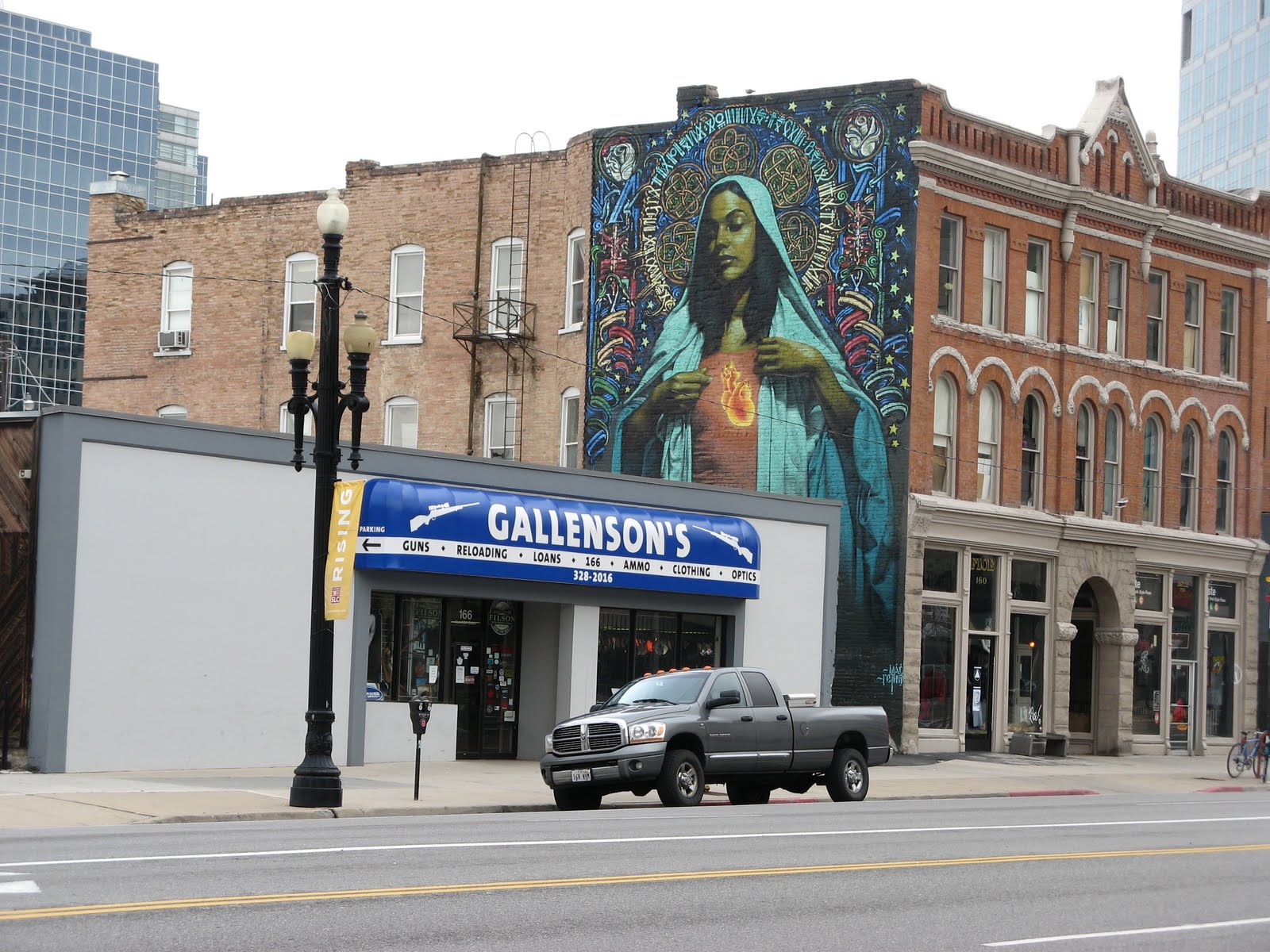
Virgin Mary Mural in Salt Lake City


Sunday, June 16, 2024

Churches of the West: The Bishop of Rome.

Churches of the West: The Bishop of Rome.

The Bishop of Rome.

By this time, most observant conservative Catholics are either so fatigued from Papal issuances that they either disregard them, or cringe when they come out. They seem to come out with a high degree of regularity.

And, while we don't technically have a new one, a "study document" issued by the Dicastery for Promoting Christian Unity has put out something that has the Pope's approval to be issued, that being something that looks at the role of the Papacy itself:


Now, it's a very large document, so I'm not going to attempt to put it all out here, and I haven't read all of it either.  So, we're going to turn to  The Pillar to find out what it holds.  The Pillar states:

What does it say? 

Helpfully, the text has a section summarizing the four sections (beginning on p106).

1) Regarding responses to Ut unum sint, the document says that the question of papal primacy is being discussed in “a new and positive ecumenical spirit.” 

“This new climate is indicative of the good relations established between Christian communions, and especially between their leaders,” it says. 

2) Concerning disputed theological questions, the text welcomes what it calls “a renewed reading” of the classic “Petrine texts,” which set out the Apostle Peter’s role in the Church.

“On the basis of contemporary exegesis and patristic research, new insights and mutual enrichment have been achieved, challenging some traditional confessional interpretations,” it notes. 

One particularly controversial issue, it says, is the Catholic conviction that the primacy of the Bishop of Rome was established de iure divino (by divine law), “while most other Christians understand it as being instituted merely de iure humano” (by human law). 

But the document says that new interpretations are helping to overcome “this traditional dichotomy, by considering primacy as both de iure divino and de iure humano, that is, being part of God’s will for the Church and mediated through human history.” 

Another enduring obstacle is the First Vatican Council. But the document says that here too there has been “promising progress,” thanks to ecumenical dialogues that seek “a ‘rereading’ or ‘re-reception’” of the Council’s decrees. 

This approach, it says, “emphasizes the importance of interpreting the dogmatic statements of Vatican I not in isolation, but in the light of their historical context, of their intention and of their reception — especially through the teaching of Vatican II.” 

Addressing this point in a June 13 Vatican News interview, Cardinal Koch said that since Vatican I’s “dogmatic definitions were profoundly conditioned by historical circumstances,” ecumenical partners were encouraging the Catholic Church to “seek new expressions and vocabulary faithful to the original intention, integrating them into an ecclesiology of communion and adapting them to the current cultural and ecumenical context.”  

“There is therefore talk of a ‘re-reception,’ or even ‘reformulation,’ of the teachings of Vatican I,” the Swiss cardinal explained. 

3) Summarizing the document’s third section, the text says that fresh approaches to disputed questions have “opened new perspectives for a ministry of unity in a reconciled Church.” 

Crucially, the document suggests there is a common understanding that although the first millennium of Christian history is “decisive,” it “should not be idealized nor simply re-created since the developments of the second millennium cannot be ignored and also because a primacy at the universal level should respond to contemporary challenges.”

From the ecumenical dialogues, it’s possible to deduce “principles for the exercise of primacy in the 21st century,” the text says. 

One is that there must be an interplay between primacy and synodality at every level of the Church. In other words, there is a need for “a synodal exercise of primacy.”

Synodality is notoriously difficult to define, but the document describes it at one point as “the renewed practice of the Synod of Bishops, including a broader consultation of the whole People of God.” 

4) Among the practical suggestions for a renewed exercise of the ministry of unity, the document highlights the possibility of “a Catholic ‘re-reception’, ‘re-interpretation’, ‘official interpretation’, ‘updated commentary’ or even ‘rewording’ of the teachings of Vatican I.” 

It also stresses appeals for “a clearer distinction between the different responsibilities of the Bishop of Rome, especially between his patriarchal ministry in the Church of the West and his primatial ministry of unity in the communion of Churches, both West and East.”  

“There is also a need to distinguish the patriarchal and primatial roles of the Bishop of Rome from his political function as head of state,” the text says, adding: “A greater accent on the exercise of the ministry of the pope in his own particular Church, the Diocese of Rome, would highlight the episcopal ministry he shares with his brother bishops, and renew the image of the papacy.” 

The new document appears months after Pope Francis restored the title “Patriarch of the West” among the list of papal titles in the Vatican’s annual yearbook, after it was dropped by his predecessor Benedict XVI. 

Commenting on that development at the June 13 Vatican press conference, Cardinal Koch said that neither Francis nor Benedict XVI offered detailed explanations for the change. 

“But I am convinced they did not want to do something against anyone, but both wanted to do something ecumenically respectful,” he commented. 

Another suggestion is for the Catholic Church to further develop its practice of synodality, particularly through “further reflection on the authority of national and regional Catholic bishops’ conferences, their relationship with the Synod of Bishops and with the Roman Curia.” 

Finally, the text mentions a request for regular meetings among Church leaders at a worldwide level, in a spirit of “conciliar fellowship.”

What does that mean?

Well, frankly, I don't grasp it.

Without having read it, I sort of vaguely grasp that the Pope, who recently revived using the title Patriarch of the West, is sort of modeling this view of the Papacy on the Churches of the East, sort of.  In the East, each Church is autocephalous, with the Patriarch of Constantinople holding a "first among equals" position.  I don't think the Pope intends to fully go in that direction, but vaguely suggest that the synodal model of the East should apply more in the West, and that as Patriarch of the West, perhaps the entire Apostolic Church could be reunited, and perhaps even sort of vaguely include the "mainline" Protestant Churches, by which we'd mean the Lutheran and Anglican Churches.

It sort of interestingly brings up the Zoghby Initiative of the 1970s, in which Melkite Greek Catholic Church bishop Elias Zoghby sought to allow for inter-communion between the Melkites and the Antiochian Orthodox Church after a short period of dialogue.  His position was, basically, that this reunion could occur with a two point profession of faith, those being a statement of belief in the teaching gof the Eastern Orthodox churches and being in communion with the Bishop of Rome as the first among the bishops "according to the limits recognized by the Holy Fathers of the East during the first millennium, before the separation."

Thing was, there really were no limits.  In the first thousand years before the separation it's pretty clear that the Pope was head of the Church.  Indeed, from the earliest days that was recognized.

Bishop Zoghby's initiative went nowhere and he's since passed on, but this sort of interestingly recalls it.  His effort received criticism from figures within Orthodoxy and the Roman Catholic Church, although a few Eastern Catholics admired it.  Here, I'd predict that conservative Catholics are not going to be too impressed.

Additionally, a recent problem barely noticed in the West is that the recent focus of Pope Francis on blessings for people in irregular unions, which is widely interpreted to mean homosexuals, has not only upset conservative Catholics, but Eastern Churches in some cases have backed away from the Catholic Church.  One Eastern Bishop who was getting quite close to Rome came out and stated that Fiducia Supplicans basically prevented any chance of reunion with his church.

This gets back to some things we've noted here before.  One is that this Papacy seems very focused on Europe, although the fact that this also looks towards the East cuts against that statement a bit.  Having said that, a good deal of the early focus of this Papacy was on European conditions, which have continued to be a problem as the German Church is outright ignoring Pope Francis to a large degree.  Loosening the role of the Papacy may stand to make those conditions worse, and probably won't bring the mainstream of the Lutherans and Anglicans in.  Which gets to the next point.  The Reformation is dying.

Seemingly hardly noticed is that the real story in Christianity, to a large degree, is the rapid decline in the old Reformation Protestant churches.  People like to note "well Catholic numbers are declining too", but frankly real statistical data shows that while there may be a decline, it's slight.  Indeed, what appears to be occurring in the Western World is that conversions to Catholicism offset departures. That's not growth, but what that sort of shows is the decline in cultural affiliation with a certain religion and, at least in the US, the end of the byproduct of the Kennedy Era Americanization of the Church.  Indeed, at the same time this is going on, the growth in Catholic conservatism and traditionalism in younger generations has grown too big to ignore.At the same time, Eastern Catholic Churches are gaining members from outside their ethnic communities, and the Easter Orthodox are gaining adherents from conservative Protestants who are leaving their liberalizing denominations.

This is a study document, so it's not a proclamation.  Twenty years ago or maybe even ten, I would have thought this a really good idea.  My instinct now is that its time has passed.  While conservative Catholics hold their breaths about the upcoming next session of the Synod on Synodality, there's sort of a general sense of marking time here as well, and indeed, an uncomfortable one.  The current Papacy has is very near its end, everyone knows this, but it puts out a lot of material that's of a highly substantive, and often controversial, nature.  Much of this is going to have to be dealt with after this Papcy concludes. Both the volume and speed at which things are occurring may reflect this, as that knowledge operates against the clock, but it might also be a reason to slow down at the Vatican level, or even put a bit of a time-out on things.

Footnotes:

1.  Indeed, I was at Confession recently on an average Saturday and noted that as I was there a  young woman with her two children were waiting in front of me, with both children saying Rosaries and the mother wearing a chapel veil. Her mother came in and also was wearing one, and a stunning young woman of maybe 20 came in also wearing one.  Every woman, and most of them were young, were attired in that fashion.

It's a minor example, but very notable.  This is becoming common.