Showing posts with label Blog Mirror. Show all posts

Wednesday, February 18, 2026

Lex Anteinternet: Lex Anteinternet: Ash Wednesday.

Lex Anteinternet: Lex Anteinternet: Ash Wednesday.: In this spirit of this being Catholic Question Season, i.e,. the time of the year Catholics are mostly likely to get questions as to "w...

Lex Anteinternet: Ash Wednesday.

In this spirit of this being Catholic Question Season, i.e,. the time of the year Catholics are mostly likely to get questions as to "why do you do that?", I"m rerunning something I've already rerun:
Lex Anteinternet: Lex Anteinternet: Secular suffering for nothing & ...: A couple of reruns. for the first day of Lent, Ash Wednesday, 2023, from a couple of years ago:   Lex Anteinternet: Secular suffering for no...

Lex Anteinternet: Secular suffering for nothing & on Ash Wednesday


A couple of reruns. for the first day of Lent, Ash Wednesday, 2023, from a couple of years ago:  Lex Anteinternet: Secular suffering for nothing.

Secular suffering for nothing


Today is Ash Wednesday, the start of Lent.

While Catholic observances tend to at least somewhat baffle those who are not familiar with them, and therefore reinterpret them either though the bigoted Anglicization of popular history they've received, or through their own broken lenses on the world, lots of people are at least somewhat familiar with them.  One of the things they're somewhat familiar with is fasting.

We've dealt with this before, but Latin Rite Catholics have a minimal duty of fast and abstinence during Lent.  And it is indeed very minimal. The fast days are now down to two.  There are more days of abstinence during Lent.

And this post isn't about that.

Rather, this post is about American secular suffering and its pointless nature.

I'm occasionally the accidental unwilling silent third person in a long running conversation between two people on diets, which they're constantly off and on. The oddity of it is that neither of the two people involved have any need whatsoever to be on a diet. They aren't even ballpark close to being overweight.  None the less, they'll go on diets and the diets tend to be based on pseudoscience.

I don't want to be harsh on people for this as there's now so much pseudoscience in American culture it's simply mind boggling. We've gone from a society that in the 1960s and 1970s emphasized science  to one that now abhors it and goes for non scientific faddism.  There are so many examples of this that actually going into all of it would require a blog the size of the Internet at this point.  Food faddism is common.

Not a day goes by when I don't get a bunch of spam posts (and how ironic that they'd be called "spam" devoted to dietary bullshit, most of which has to do with eating something that will "melt away fat", probably overnight so that you don't have to be inconvenienced while watching television during the day.  It's not going to do that.  A wild example of that is one that bills itself as some sort of ice cream, with the photographs in the spam showing chocolate ice cream.  Chocolate ice cream is disgusting in the first place, and it's not going to make you think.  

Anyhow, these two fit people are constantly on diets of the faddish variety, involving such things as "cleanses" and the like.  None of that does anything, at least not in the way a person thinks.  Some of it might, accidentally, such as abstaining from alcohol. That'll do something, but not in a cleanse fashion.  And some of it probably does something as it approaches a sort of low yield style of intermittent fasting.

I've now watched people on diets for decades, and I'm wholly convinced that none of them doing anything whatsoever.  I've watched people on Keto lose weight and then balloon back up to just as heavy as they were before, for example.  

Nothing ultimately escapes from the basic fact that weight=calories in-calories out.   That's it.

So you can be on keto, but if you eat bacon and eggs for breakfast, a ham for lunch, and then go eat a big dinner, you're going to be really heavy if you are an office worker.  Pretty simple.

That is why, I'll note, intermittent fasting actually does cause people to lose weight, but it's not a diet, it's fasting.  I'll also note that I'm not a doctor and I'm not telling you to fast to lose weight.  If you need to lose weight, see your doctor.  A real doctor.  Not the homeopathic doctor of Burmese weight loss and orthopody.  No, not him.  A real bonafide physician.  They exist.

Anyhow, I don't think that a lot of people need to go on diets at all, including the folks I just noted.

Now, some people really do. A lot of Americans are really, really, heavy.  Some say a majority are overweight.  I get that.  But none the less I'd guess about 60% of the people I see on diets or discussing diets are not overweight.  I don't think they go on diets, deep down, as they're overweight.

They do it as they need to be suffering for something.

Now, this gets back to Lent. Catholics don't fast and abstain in order to suffer. They do it in order to focus and build discipline, and sacrifice for their sins.  If it involves an element of suffering, well so do a lot of things.

But devoted Catholics accept suffering as part of life.  It's inescapable.  Life is full of suffering.  Part of that suffering is brought about by license.

The irony of freedom is that freedom to chose isn't freedom.  License doesn't actually equal liberty.  The freedom to chose is the freedom to chose wisely, and that brings a sort of real freedom.  It doesn't mean, kid like, that I can choose to eat ice cream for dinner, and it doesn't mean, modern society like, that I chose all the members of the opposite sex, or whatever, that I might fancy at the moment. 

And indeed, that sort of "freedom" leads not to freedom but to slavery.  People become enslaved to their wants.  A massive amount of American culture is now presently completely devoted to slavery of this type, particularly sexual slavery of both an intellectual and actual kind.  The entire pornography industry is a type of "white slavery", involving the prostitution of women and the enslavement of men to lust.

Catholic fasting ties into freedom as it has as an element the concept of building resistance to enslavement.  If you can say no to food you can also say no to alcohol, or tobacco, or to vice.  It might take practice, hence the discipline of fasting.

Which is also why the slow Latin relaxing of fasting and abstinence rules was, in my view, a real mistake.  The concept of the Church in North American, for example, that relaxing abstinence on Friday's throughout the year would result in the substitution of a meaningful personal substitute was, frankly, largely wrong.

And it achieves, of course, more than that.

Fasting, experienced as a form of self-denial, helps those who undertake it in simplicity of heart to rediscover God’s gift and to recognize that, created in his image and likeness, we find our fulfilment in him. In embracing the experience of poverty, those who fast make themselves poor with the poor and accumulate the treasure of a love both received and shared. In this way, fasting helps us to love God and our neighbour, inasmuch as love, as Saint Thomas Aquinas teaches, is a movement outwards that focuses our attention on others and considers them as one with ourselves.

Pope Francis, Lenten message, 2021.

Secular fasting doesn't actually achieve anything.  But then, much of modern American life is aimless and directionless.  It's been wholly focused on materialism and nothing else.  People aren't rooted to place or people as those things interfere with "freedom". They aren't bound by traditional rules of right and wrong, obligation and duty, service to country and community, or the obligations imposed by law outside of the civil law, those being the walls of canon law and natural law, and biological law.  They aren't even accepting of the final binds of death, which Americans don't acknowledge as real, and which provides the reason that at 40 years old you aren't going to be the physical specimen you were at 20, and things will certainly be different at 60.

Now, to be sure, most Catholics are no different in the modern world than anyone else.  A people who were once outside of the culture as they were different, where they were a minority, and were outside the world in a way as they were distinct from it even where they were a majority, now fall prey to all the modern vices that are portrayed as virtues, and self excuse those that are regarded by the Church as sins.  Some of the Church religious itself, mostly older baby boomer aged whose time is past but they don't realize it, still campaign to overthrow Church law in the name of temporal freedom, not realizing that they propose to bring in the chains of slavery.  None of that, however, changes the basic point.

Humans sense that abundance can be slavery.  They also reject so often the breaking of their chains. But even when they do, they reach out, darkly, to the disciplines that would free them.  They sense they have to do something, and often substitute suffering, vaguely, for the practices that would open the manacles.

And one on Ash Wednesday itself:

Ash Wednesday

Today is Ash Wednesday for those churches that follow the Catholic Latin Rite's liturgical calendar, which includes a fair number of Protestant churches.

Ash Wednesday is the beginning of Lent for Western Christians, Lent being the (approximately) forty day long penitential season preceding Easter.  Great Lent, the Eastern Christian seasons, precedes Ash Wednesday and commences on Clean Monday for Eastern Christians on the new calendar, but not on the old calendar which has, of course, which departs from the calendar we're otherwise familiar with.   The day is named for the Catholic practice, which is observed by at least some Anglicans and Lutherans as well, of placing ashes on the foreheads of those who come to the Ash Wednesday service, with the reminder being made that from ashes you were made, and from ashes you will return.*

For Latin Rite Catholics, Ash Wednesday is a day of fast and abstinence.  I.e, they eat only one full meal on this day and it can't include meat, which under Latin Rite Catholic rules does not include fish.  For Eastern Christians a much stricter Lenten fast and abstinence set of rules applies.  This sacrifice serves the purpose of being penitential in nature.

It also serves to really set Catholics apart, as fasting and abstinence are the rage in the west now, but for purely secular purposes, not all of which square with science or good dietary practices.

For the members of the Apostolic faiths, Lent also serves as a time in which for penitential reasons they usually "give up" something.  A lot of people have a really superficial understanding of this, assuming that Catholic "give up" desert or chocolate or something, and in fact quite a few people do something like that. Indeed, as an adult I've been surprised by how many Catholics (usually men) give up drinking alcohol, which means that frequent consumption of alcohol is pretty common society wide in a way that we probably underestimate.

Indeed, just recently, on that, I was asked by an exuberant Catholic Midwestern expat, who seemingly has no boundaries at all, on what I was "giving up" for Lent. This was the week prior to Ash Wednesday at which time I wasn't particularly focused on it myself.  The same fellow asked at least one Protestant what she was giving up, with that Protestant being a member of one of the American millennialism religions, to receive a totally baffled reply.  Indeed, I'm sure they don't celebrate Lent at all, so the question was odd.  Anyhow, he was giving up alcohol and asked if I'd like to join him, to which I absent mindedly said sure.  Later he was wondering if I thought it would be tough, which I'm sure it won't be at all and I'll have to find something else to mark Lent really.  But that sort of "giving up" line of thinking is very common.

In a lot of Catholic cultures the Lenten penitential observations have traditionally been much stronger, which helps explain Mardi Gras as we just discussed.  Even well after the Latin Rite rules were very much relaxed, in many Catholic areas, including Catholic areas of the United States, people engaged in much more extensive penitential observations with the "giving up chocolate" type thing really sort of an introduction to the practice.  In Louisiana, without going into it too deeply, there was traditionally a big spike in births nine to ten months after Easter, which reflected a very widespread serious observation among Catholic couples as to their penitential practice, for example.

Some of that is really coming back, which reflects an interesting trend towards a deeper understanding of their faiths by members of the Apostolic faiths and even a return of Lenten traditions in some Protestant ones.  During the full "Spirit of Vatican Two" era there was a lot of attention devoted to not giving anything up but rather to work on some spiritual need.  I.e, be self reflective and work on what that lead you to.  At the same time, the misuse of the word "fasting" became very common, with there being advice, even from the clergy, to fast from things other than food or drink.  You can't really fast from sinful behavior, or from narcissism, for example.  You can't even "fast" from the Internet, although "giving it up" for Lent might be a darned good idea (one that I really ought to consider, probably).

A lot of that is now passing and there's been a real return to more traditional observations of Lent, including fasting but also forms of dedicated worship and observation.

Which brings me to the next thing about "giving up".  One feature of this season is that many Apostolic Christians, as it is the season of repentance, have used the season to break bad conduct when there's support, spiritual and temporal, for doing it.  People with alcohol problems will use it to break them, smokers will quit smoking during Lent so they can quit smoking.  And sometimes people with serious attachments to sin take it head on during Lent, with some people I've known even announcing the renouncement of what are very serious sins from a Christian purpose over Lent in the hopes of breaking from the permanently. And many who do that, succeed at doing that.

Which in turn takes us to our final observation.  This season, which is lead by the Apostolic faiths but which is observed by at least some of the Protestants as well, tend to turn the self indulgent retained Puritan abstinence on its head.  I've noted this before, but North American and the Northern Europe may have strayed enormously from Calvinist influence in terms of faith, but not in terms of the concept that public suffering is really necessary.  That retained concept explains in large part the real focus in these lands, as opposed to others, in "giving up" something for no real purpose other than the sense it must be done.  People give up all sorts of things that Apostolic Christians around the world give up for forty some days, and often on a declared permanent basis (they fail at it more often than not), with it being notable that the purely secular nature of that makes it shallow from the onset.  Indeed, plenty of people who will spend Lent scoffing at Catholics for Lent will spend part of the season or all of it on some no carb, or no meat, or whatever, diet, for no real reason other than a constructed one. Suffering, in many instances, is the ultimate goal of those efforts, but suffering without something to redeem it.

For Apostolic Christians, all fasts are followed by feasts, and that's something to remember.

_________________________________________________________________________________

*I don't think this is a practice in the East and its not a requirement for Catholics, something that in fact even confuses some Catholics.  Ash Wednesday is widely observed by Catholics and the placing of the ashes isn't restricted to Catholics.  Perhaps for that reason quite a few Catholics assume it is a Holy Day of Obligation.

One thing of note here is that Ash Wednesday also serves to point out to everyone who is a Catholic, as if a person has ashes on their head, they're probably Catholic, although not necessarily.  By the same token, if you are known to be a Catholic and don't make it to Ash Wednesday you'll tend to get comments about it.
I'll note I've already had the "why" question, sort of, from a coworker who isn't Catholic, but whose children attend Catholic school.  The coworker assumed that I have to go to Mass this morning, as its Ash Wednesday.

No, I don't.

Ash Wednesday is not a Holy Day of Obligation.  It's widely observed, and many Catholics observe it.  I have observed it myself, of course, particularly when I was younger.  the poor excuse I now have for not making it to Mass is that I start work before any Masses are offered, save for the 6:00 a.m. which I very rarely ever make, I don't usually take lunch, and I'm beat to a pulp by the time I leave work.

Sorry excuse on my part.

That tends to mean, however, that I get nearly as many "why" questions as people with ashes on their foreheads.  People know that I'm Catholic, whic h a good thing, so they wonder why I don't have ashes on my forehead.

Wednesday, February 11, 2026

Lex Anteinternet: Thursday, February 11, 1926. Calles attacks the Church.

Lex Anteinternet: Thursday, February 11, 1926. Calles attacks the C...: Plutarco Elías Calles nationalized all property of the Catholic church in Mexico. The degree to which the leaders of the Mexican Revolution ...

Thursday, February 11, 1926. Calles attacks the Church.


Plutarco Elías Calles nationalized all property of the Catholic church in Mexico.

The degree to which the leaders of the Mexican Revolution were anti Catholic in a very Catholic nation is hard to overestimate, although at the same time, particularly in some regions, Catholic viewpoints were very represented amongst the revolutionaries.  Emiliano Zapata in particularly was notably Catholic.

Be that as it may, Madero was not a practicing Catholic and had peculiar spiritual views.  He was in fact a spiritualist and a Mason.  Still, his victory in the revolution, temporary though it was, was seen by Catholics as an opportunity to form a Mexican Catholic political party, which they did.  The Church condemned Madero's assassination.

It was that killing that sparked the second stage of the revolution.   Álvaro Obregón and Calles both featured prominently in that, and both were anti Catholic.  Calles was also a Mason.  In that phase of the revolution, moreover, democratic forces, which had brought about Madero's rise, started to wane and with the murder of Zapata and the victory of Carranza Mexico headed off in a much more radically leftist direction. In some ways the Mexican Revolution, in spite of its romantic portrayal in American cinema, was much more of a 20th Century European Revolution, many of which featured radically anti Catholic leaders against Catholic populations in favor of utopian leftism.

Calles fit that mold and was the sort example in the office of president of Mexico.  His anti clerical laws would lead to the Cristero War the following year.

Mexico remains a very Catholic country to this day and the Mexican people are very Catholic. But like other religious communities, the period of anti religious domination hurt the religious nature of the people nonetheless and the culture of the country.  Mexico has never really recovered from the anti religious views of the revolution.  Ironically, one of the beneficiaries of that has been Protestant Millennialism which has been successful in drawing in religious Mexicans who are unchurched, a byproduct of the revolution.

Actor Leslie Nielsen was born in Regina, Saskatchewan.  He served in the Royal Canadian Air Force during World War Two as an aerial gunner, although he was not deployed overseas.

Last edition:

Wednesday, February 10, 1926. Going to the League.

Sunday, May 4, 2025

Lex Anteinternet: Donald Trump insults Catholicism.

Lex Anteinternet: Donald Trump insults Catholicism.

Donald Trump insults Catholicism.

There is nothing clever or funny about this image, Mr. President. We just buried our beloved Pope Francis and the cardinals are about to enter a solemn conclave to elect a new successor of St. Peter. Do not mock us.

New York State Conference of Catholic Bishops. 

Trump, in something that's supposed to be a jest, posted a photograph of himself dressed as a Pope, no doubt generated by the onrushing curse of our age, AI.

I'm not going to post it.

This should serve as as warning to Trump supporting Catholics.  Trump, who received widespread Evangelical Christian support and who has housed an faith advisor office in the White House which is staffed by a rather peculiar Evangelical pastor, shows no signs at all as taking religion seriously, and never has, but he is comfortable with coopting it.  In spite of that, and this was inevitable, he doesn't mind mocking the oldest and original Christian religion.

That tells you what you need to know.

I've long held that a real Christian can't be comfortable with either of the two major US political parties or with their recent leaders.  Only the American Solidarity Party comes close to being a party Christians can really be comfortable with.  The presence of Catholic politicians at the forefront of either party does not change this.  Biden advanced the sea of blood objectives of the infanticide supporting Democratic Party.  J.D Vance has supported the IF policies of the bizarre Trump protatalist agenda and that's just a start.  The Church has rarely attempted to hold Catholic politicians directly to account for reasons known to itself.

Before the Trump regime concludes, this is going to get worse.  Trump will conclude that he doesn't need Catholics for anything, because he does not.  A religion which is catholic, ie., universal, by nature will not ultimately be comfortable with a political philosophy which aggressively nationalist and nativist.  This, indeed, has been the history of Catholicism in the US, with it only being after the election of John F. Kennedy that things changed.

Some will claim, of course, that this means nothing and its just Trump trying to be funny. That's politically disturbing enough, as Trump is already an embarrassment to the country.  But those who think this should ask if Trump would have dared to depict himself as, for example, an imam. . . not hardly.

Trump's insult is offered as its safe to offer it.  As has sometimes been noted, anti Catholicism is the "last acceptable prejudice".  Trump offered this insult as it fits in nicely with his contempt for Christianity in general, but more particular, for his contempt for the Church, something that fits in nicely with the most extreme of his Evangelical supporters.

Catholics need to review the meaning of The Epistle of Mathetes to Diognetus.  We're part of something larger, and once we surrender to something smaller, we need to be cautious.  We can expect to be mocked and held in contempt, and if we aren't, there may well be something wrong with our witness.

But we don't have to accept the situation, nor tolerate it, where we do not need to.

Tuesday, February 11, 2025

Lex Anteinternet: Blog Mirror: LETTER OF THE HOLY FATHER FRANCIS TO THE BISHOPS OF THE UNITED STATES OF AMERICA

Lex Anteinternet: Blog Mirror: LETTER OF THE HOLY FATHER FRANCIS ...:  

Blog Mirror: LETTER OF THE HOLY FATHER FRANCIS TO THE BISHOPS OF THE UNITED STATES OF AMERICA

 LETTER OF THE HOLY FATHER FRANCIS

TO THE BISHOPS OF THE UNITED STATES OF AMERICA 

_________________


Dear Brothers in the Episcopate,

I am writing today to address a few words to you in these delicate moments that you are living as Pastors of the People of God who walk together in the United States of America.

1. The journey from slavery to freedom that the People of Israel traveled, as narrated in the Book of Exodus, invites us to look at the reality of our time, so clearly marked by the phenomenon of migration, as a decisive moment in history to reaffirm not only our faith in a God who is always close, incarnate, migrant and refugee, but also the infinite and transcendent dignity of every human person. [1]

2. These words with which I begin are not an artificial construct. Even a cursory examination of the Church’s social doctrine emphatically shows that Jesus Christ is the true Emmanuel (cf. Mt 1:23); he did not live apart from the difficult experience of being expelled from his own land because of an imminent risk to his life, and from the experience of having to take refuge in a society and a culture foreign to his own. The Son of God, in becoming man, also chose to live the drama of immigration. I like to recall, among other things, the words with which Pope Pius XII began his Apostolic Constitution on the Care of Migrants, which is considered the “Magna Carta” of the Church’s thinking on migration:

“The family of Nazareth in exile, Jesus, Mary and Joseph, emigrants in Egypt and refugees there to escape the wrath of an ungodly king, are the model, the example and the consolation of emigrants and pilgrims of every age and country, of all refugees of every condition who, beset by persecution or necessity, are forced to leave their homeland, beloved family and dear friends for foreign lands.” [2]

3. Likewise, Jesus Christ, loving everyone with a universal love, educates us in the permanent recognition of the dignity of every human being, without exception. In fact, when we speak of “infinite and transcendent dignity,” we wish to emphasize that the most decisive value possessed by the human person surpasses and sustains every other juridical consideration that can be made to regulate life in society. Thus, all the Christian faithful and people of good will are called upon to consider the legitimacy of norms and public policies in the light of the dignity of the person and his or her fundamental rights, not vice versa.

4. I have followed closely the major crisis that is taking place in the United States with the initiation of a program of mass deportations. The rightly formed conscience cannot fail to make a critical judgment and express its disagreement with any measure that tacitly or explicitly identifies the illegal status of some migrants with criminality. At the same time, one must recognize the right of a nation to defend itself and keep communities safe from those who have committed violent or serious crimes while in the country or prior to arrival. That said, the act of deporting people who in many cases have left their own land for reasons of extreme poverty, insecurity, exploitation, persecution or serious deterioration of the environment, damages the dignity of many men and women, and of entire families, and places them in a state of particular vulnerability and defenselessness.

5. This is not a minor issue: an authentic rule of law is verified precisely in the dignified treatment that all people deserve, especially the poorest and most marginalized. The true common good is promoted when society and government, with creativity and strict respect for the rights of all — as I have affirmed on numerous occasions — welcomes, protects, promotes and integrates the most fragile, unprotected and vulnerable. This does not impede the development of a policy that regulates orderly and legal migration. However, this development cannot come about through the privilege of some and the sacrifice of others. What is built on the basis of force, and not on the truth about the equal dignity of every human being, begins badly and will end badly.

6. Christians know very well that it is only by affirming the infinite dignity of all that our own identity as persons and as communities reaches its maturity. Christian love is not a concentric expansion of interests that little by little extend to other persons and groups. In other words: the human person is not a mere individual, relatively expansive, with some philanthropic feelings! The human person is a subject with dignity who, through the constitutive relationship with all, especially with the poorest, can gradually mature in his identity and vocation. The true ordo amoris that must be promoted is that which we discover by meditating constantly on the parable of the “Good Samaritan” (cf. Lk 10:25-37), that is, by meditating on the love that builds a fraternity open to all, without exception. [3]

7. But worrying about personal, community or national identity, apart from these considerations, easily introduces an ideological criterion that distorts social life and imposes the will of the strongest as the criterion of truth.

8. I recognize your valuable efforts, dear brother bishops of the United States, as you work closely with migrants and refugees, proclaiming Jesus Christ and promoting fundamental human rights. God will richly reward all that you do for the protection and defense of those who are considered less valuable, less important or less human!

9. I exhort all the faithful of the Catholic Church, and all men and women of good will, not to give in to narratives that discriminate against and cause unnecessary suffering to our migrant and refugee brothers and sisters. With charity and clarity we are all called to live in solidarity and fraternity, to build bridges that bring us ever closer together, to avoid walls of ignominy and to learn to give our lives as Jesus Christ gave his for the salvation of all.

10. Let us ask Our Lady of Guadalupe to protect individuals and families who live in fear or pain due to migration and/or deportation. May the “Virgen morena”, who knew how to reconcile peoples when they were at enmity, grant us all to meet again as brothers and sisters, within her embrace, and thus take a step forward in the construction of a society that is more fraternal, inclusive and respectful of the dignity of all.

Fraternally,

Francis

From the Vatican, 10 February 2025

Thursday, January 2, 2025

Lex Anteinternet: New Years Day. Looking at 2024 through the front of the Church doors.

Lex Anteinternet: New Years Day. Looking at 2024 through the front ...

New Years Day. Looking at 2024 through the front of the Church doors.

I noted in our post  New Year's Resolutions for Other People, sort of that we weren't going to post resolutions, but we did have some comments.  That's true here as well.

New Years Day is the Solemnity of Mary, the Holy Mother of God, a Catholic holy day of obligation.  Like a lot of Catholics, I went to Mass last night.


I didn't go last night as I intended to go whoop it up on the town.1   I've never been big on celebrating "New Years" anyhow, although we did last night with family and sort of extended family, as we have a at this point another person in the second half of their twenties whose pretty much incorporated into the family, but not officially or by blood.  Anyhow, it was pretty low key and I was in bed before midnight.  I think last year I made it to midnight to observe the fireworks some neighbors set off.  This year I did not.  I'm amazed that the same people, who really like fireworks, set them off again, as we've had hurricane force winds for the past day or so.

Anyhow, the reason I'm posting this comment is due to a particularly troublesome year for American Christianity in 2024.

American Protestants don't like to believe it, but the United States is and has always been a Protestant Country.  It's so Protestant, that the Protestants can't recognize that, and even people who claim to have no religion at all are pretty Protestant.  Even a lot of Catholics are pretty Protestantized and I've known some fairly secular Jews who were fairly Protestant.

Protestantism is a pretty big tent, with there being all sorts of tables within it, and with some of the tables really not liking others.  For much of the country's history the Episcopal Church was the dominant Protestant Church, which made a lot of sense.  The Episcopal Church is, of course, part of the Anglican Communion and the English descent is dominant in American ancestry.  Supposedly this is 26% of the population now, but that figure is probably inaccurate by at least half simply because people whose ancestry stretches back away have simply forgotten it and is not celebrated the way other ancestral inheritance is.  I'm of overwhelming Irish ancestry but even I have a little English ancestry of the Anglo Norman variety, brough in through Ireland.

Anyhow, as in the 18th Century most residents of British North America were from Great Britain, most were members of the Church of England, outside of Canada, where of course they were French and Catholic.

The Episcopal Church has never been in the only Protestant Church in what is now the US, however.  Right from the beginning there were bodies of dissenters from the established church who came here to be able to practice their faith without being molested for it. That doesn't mean they were keen on others practicing their faiths, and they often didn't tolerate other Protestants at all.  But they were there, and that gave rise to a sort of rough and ready loosely organized Protestantism in some regions, particularly the American South.  These groups really prospered following the American Civil War as they hadn't gotten behind the war the way Southern Episcopalians had.  These groups really spread across the nation following the 1970s.  Looking back, its amazing to realize that growing up I knew exactly one Baptist kid (he's now a Lutheran) and the three big Protestant churches in this category didn't exist here.  Wyoming is the least religious state in the US, but at that time almost all the Protestants I knew were Lutheran or Episcopalian.  I knew a handful of Methodists and of course Mormons, but Baptists or Assemblies of God?  Nope.

So what's this have to do with 2024?

The Election of 2024 saw a really strong association of Evangelical Christianity, which is very much an American thing, and the vote.  It's distinctly different than anything that's occurred before.

Evangelical Christianity has been nationally significant in elections since at least 1950 or so, but it wasn't until 2024 that the "Christian vote" meant the Evangelical vote outside of the American South.  Because they are fractured, they are not the largest Christian body in the country.  Oddly enough, while 67% of the population self identifies as Christian, and something like 44% identify as Protestant, Catholics are the largest single denomination.

The back story to this however is that the Reformation, which started in 1517, is ending.  

The Reformation was able to start in the first place due to a large element of ignorance.  This can't be said of Luther, who wasn't ignorant, but who was opinionated and wrong.  Luther opened the door, however, to people like Calvin, Zwingli and Knox who were fundamentally ignorant in certain ways.

The spread of cheap printing and ultimately the Internet makes ignorance on some things much more difficult to retain.  For centuries bodies of Protestant Christians held to sola scriptura and a belief that they were like the first Christians, even though there's always been Christian texts dating back to shortly after Christ's crucifixion.2   Now, all of a sudden, anybody can read them.  This has in fact caused a pronounced migration of really serious sola scriptura Christians to the Apostolic Churches, as well as a migration by serious "mainline" Protestants.  Some bodies at this point, like very conservative Anglicans and Lutherans, are mostly Protestant out of pure obstinance. 

The ultimate irony of all of this is that the mainline Protestant churches have collapsed in many places.  Part of this is due to the massive increase in wealth in the western world which has hurt religion in general, but part is also because it gets to be tough to explain why you are a member of one of these churches if you can't explain a really solid reason to be, as opposed being in an Apostolic church.

At the same time, and not too surprisingly, similar forces have been operating in the Evangelical world in the US.  As already noted, quite a few serious Evangelicals are now serious Catholics or Orthodox.  Others, however, have retreated into a deep American Evangelicalism that is resistant to looking at the early Church, even though they are aware of it. This is rooted, in no small part, to the go it alone history of these bodies.

At the same time that this has occurred, the spread of the American Civil Religion has grown which sort of holds that everyone is going to Heaven as long as they aren't bad.  Serious Catholics and Orthodox can't accommodate themselves to that but Evangelicals have attempted to, while at the same time realizing it really doesn't make sense.  

Obergefell, as we noted, was the watershed moment.  At that point, Christians of all types were faced with realizing that the US had really strayed far from observing its Christian origins, or at least the Christian faith, with there being all sorts of different reactions to it.  In Catholic Churches there was the realization that we really hadn't become as American as we thought, and we weren't going to.  Trads sprang up partially in reaction with now every Church having its contingent of Mantilla Girls giving an obstinate cultural no.

In Evangelical circles it helped fuel a militant conservatism that expresses its most radical nature in the New Apostolic Reformation which believes that we're on the cusp of a new Apostolic age, which will be Protestant in nature, and more transformational than any prior Great Awakening.  They believe that the United States is charged with a Devine mission and some have concluded, as unlikely as it would seem from the outside, that Donald Trump is an improbable Cyrus the Great who will bring this about.

The support of Southern Episcopalians for the Southern cause in the Civil War damaged in the South to such an extent that the non mainline churches, like the Southern Baptist, came up as a major force after the war.  The Baptists and Protestant itinerant preachers had warned during the war that wickedness was going to bring ruin.  It seemed that their warnings were proven by the results of the war.  Episcopal linking to a wicked cause diminished their credibility.

Donald Trump is not Cyrus the Great.  Mike Johnson is not standing in the shoes of Moses.  This will all have a bad end.  Or it might.  As noted, the Reformation is dying and in some ways this is the last stand of it.  Those linking their Christianity to a man like Donald Trump are pinning their hopes, and their faith, on a weak reed. The question is what happens when it breaks and how much damage has been done, including to Christianity in general, in the meantime.

Moreover, the question also exists if you can claim to bear a Christian standard while not observing parts of the faith that are established but uncomfortable, let alone contrary to what is now so easy to determine not to be part of the early faith.  Can those who clearly don't live a Christian life really be the shield wall against decay?  

Footnotes:

1.  As with my observation on Christmas in The Law and Christmas, being a Catholic puts you in a strange position in regard to the secular world, or rather the larger American culture.  Lots of people start celebrating New Years pretty darned early on New Years Even, which means as an employer you start to get questions about whether we're closing at noon and the like, pretty early on.  And also, while in the popular imagination people hit the bars at night, quite a few people have celebrator drinks here and there by late morning in reality.  If your concern is getting to a vigil Mass soon after work, you aren't one of those people. And if you are one of the people hitting Mass in the morning, you aren't having a late night.

2.  Sola scriptura never made sense and is obviously incorrect in that the New Testament itself mentions traditions outside of the written text.  But the Bible, moreover, which is the scripture that "Bible Believing" Christian's look to is the version that was set out by the Catholic Church as the Canon of Scripture. Nowhere in the Bible does is there a Devine instruction as to what books would be included in the Bible.

Indeed, this position is further weakened in that Luther put some books he personally didn't like in an appendix, and later Protestants removed them. That wasn't Biblical.  Moreover, the Eastern Orthodox Bible contains the Prayer of Manaseh, I Esdras, II Esdras, III Maccabees, IV Maccabees, Odes, and Psalm 151 and the Orthodox Tewahedo biblical canon some pre Christian Jewish books the others do not. While Catholics can explain why the books they include in their canon and can explain the relationship to the other Bibles, Protestant "Bible Believing" Christians flat out cannot.  All of the texts in the Orthodox Bibles are genuine ancient texts without dispute.  Moreover, there are early Christian writings which are genuine that are wholly omitted from any Bible.  The Sola Scriptura position just accepts the King James version of the Bible on the basis that it must be the canon on a pure matter of faith, which is not relying on scripture alone.

Related thread:

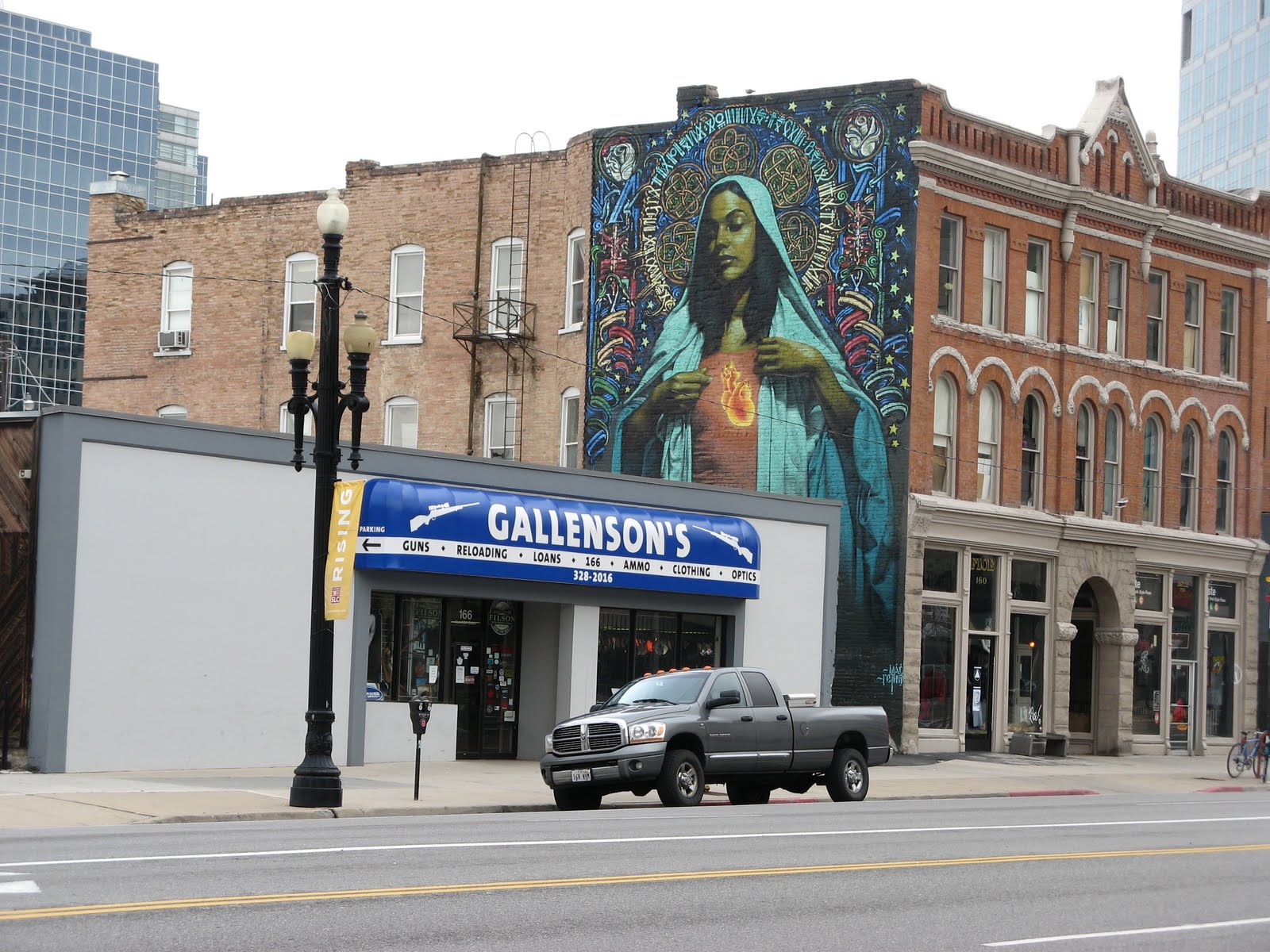
Virgin Mary Mural in Salt Lake City


Sunday, June 16, 2024

Churches of the West: The Bishop of Rome.

Churches of the West: The Bishop of Rome.

The Bishop of Rome.

By this time, most observant conservative Catholics are either so fatigued from Papal issuances that they either disregard them, or cringe when they come out. They seem to come out with a high degree of regularity.

And, while we don't technically have a new one, a "study document" issued by the Dicastery for Promoting Christian Unity has put out something that has the Pope's approval to be issued, that being something that looks at the role of the Papacy itself:


Now, it's a very large document, so I'm not going to attempt to put it all out here, and I haven't read all of it either.  So, we're going to turn to  The Pillar to find out what it holds.  The Pillar states:

What does it say? 

Helpfully, the text has a section summarizing the four sections (beginning on p106).

1) Regarding responses to Ut unum sint, the document says that the question of papal primacy is being discussed in “a new and positive ecumenical spirit.” 

“This new climate is indicative of the good relations established between Christian communions, and especially between their leaders,” it says. 

2) Concerning disputed theological questions, the text welcomes what it calls “a renewed reading” of the classic “Petrine texts,” which set out the Apostle Peter’s role in the Church.

“On the basis of contemporary exegesis and patristic research, new insights and mutual enrichment have been achieved, challenging some traditional confessional interpretations,” it notes. 

One particularly controversial issue, it says, is the Catholic conviction that the primacy of the Bishop of Rome was established de iure divino (by divine law), “while most other Christians understand it as being instituted merely de iure humano” (by human law). 

But the document says that new interpretations are helping to overcome “this traditional dichotomy, by considering primacy as both de iure divino and de iure humano, that is, being part of God’s will for the Church and mediated through human history.” 

Another enduring obstacle is the First Vatican Council. But the document says that here too there has been “promising progress,” thanks to ecumenical dialogues that seek “a ‘rereading’ or ‘re-reception’” of the Council’s decrees. 

This approach, it says, “emphasizes the importance of interpreting the dogmatic statements of Vatican I not in isolation, but in the light of their historical context, of their intention and of their reception — especially through the teaching of Vatican II.” 

Addressing this point in a June 13 Vatican News interview, Cardinal Koch said that since Vatican I’s “dogmatic definitions were profoundly conditioned by historical circumstances,” ecumenical partners were encouraging the Catholic Church to “seek new expressions and vocabulary faithful to the original intention, integrating them into an ecclesiology of communion and adapting them to the current cultural and ecumenical context.”  

“There is therefore talk of a ‘re-reception,’ or even ‘reformulation,’ of the teachings of Vatican I,” the Swiss cardinal explained. 

3) Summarizing the document’s third section, the text says that fresh approaches to disputed questions have “opened new perspectives for a ministry of unity in a reconciled Church.” 

Crucially, the document suggests there is a common understanding that although the first millennium of Christian history is “decisive,” it “should not be idealized nor simply re-created since the developments of the second millennium cannot be ignored and also because a primacy at the universal level should respond to contemporary challenges.”

From the ecumenical dialogues, it’s possible to deduce “principles for the exercise of primacy in the 21st century,” the text says. 

One is that there must be an interplay between primacy and synodality at every level of the Church. In other words, there is a need for “a synodal exercise of primacy.”

Synodality is notoriously difficult to define, but the document describes it at one point as “the renewed practice of the Synod of Bishops, including a broader consultation of the whole People of God.” 

4) Among the practical suggestions for a renewed exercise of the ministry of unity, the document highlights the possibility of “a Catholic ‘re-reception’, ‘re-interpretation’, ‘official interpretation’, ‘updated commentary’ or even ‘rewording’ of the teachings of Vatican I.” 

It also stresses appeals for “a clearer distinction between the different responsibilities of the Bishop of Rome, especially between his patriarchal ministry in the Church of the West and his primatial ministry of unity in the communion of Churches, both West and East.”  

“There is also a need to distinguish the patriarchal and primatial roles of the Bishop of Rome from his political function as head of state,” the text says, adding: “A greater accent on the exercise of the ministry of the pope in his own particular Church, the Diocese of Rome, would highlight the episcopal ministry he shares with his brother bishops, and renew the image of the papacy.” 

The new document appears months after Pope Francis restored the title “Patriarch of the West” among the list of papal titles in the Vatican’s annual yearbook, after it was dropped by his predecessor Benedict XVI. 

Commenting on that development at the June 13 Vatican press conference, Cardinal Koch said that neither Francis nor Benedict XVI offered detailed explanations for the change. 

“But I am convinced they did not want to do something against anyone, but both wanted to do something ecumenically respectful,” he commented. 

Another suggestion is for the Catholic Church to further develop its practice of synodality, particularly through “further reflection on the authority of national and regional Catholic bishops’ conferences, their relationship with the Synod of Bishops and with the Roman Curia.” 

Finally, the text mentions a request for regular meetings among Church leaders at a worldwide level, in a spirit of “conciliar fellowship.”

What does that mean?

Well, frankly, I don't grasp it.

Without having read it, I sort of vaguely grasp that the Pope, who recently revived using the title Patriarch of the West, is sort of modeling this view of the Papacy on the Churches of the East, sort of.  In the East, each Church is autocephalous, with the Patriarch of Constantinople holding a "first among equals" position.  I don't think the Pope intends to fully go in that direction, but vaguely suggest that the synodal model of the East should apply more in the West, and that as Patriarch of the West, perhaps the entire Apostolic Church could be reunited, and perhaps even sort of vaguely include the "mainline" Protestant Churches, by which we'd mean the Lutheran and Anglican Churches.

It sort of interestingly brings up the Zoghby Initiative of the 1970s, in which Melkite Greek Catholic Church bishop Elias Zoghby sought to allow for inter-communion between the Melkites and the Antiochian Orthodox Church after a short period of dialogue.  His position was, basically, that this reunion could occur with a two point profession of faith, those being a statement of belief in the teaching gof the Eastern Orthodox churches and being in communion with the Bishop of Rome as the first among the bishops "according to the limits recognized by the Holy Fathers of the East during the first millennium, before the separation."

Thing was, there really were no limits.  In the first thousand years before the separation it's pretty clear that the Pope was head of the Church.  Indeed, from the earliest days that was recognized.

Bishop Zoghby's initiative went nowhere and he's since passed on, but this sort of interestingly recalls it.  His effort received criticism from figures within Orthodoxy and the Roman Catholic Church, although a few Eastern Catholics admired it.  Here, I'd predict that conservative Catholics are not going to be too impressed.

Additionally, a recent problem barely noticed in the West is that the recent focus of Pope Francis on blessings for people in irregular unions, which is widely interpreted to mean homosexuals, has not only upset conservative Catholics, but Eastern Churches in some cases have backed away from the Catholic Church.  One Eastern Bishop who was getting quite close to Rome came out and stated that Fiducia Supplicans basically prevented any chance of reunion with his church.

This gets back to some things we've noted here before.  One is that this Papacy seems very focused on Europe, although the fact that this also looks towards the East cuts against that statement a bit.  Having said that, a good deal of the early focus of this Papacy was on European conditions, which have continued to be a problem as the German Church is outright ignoring Pope Francis to a large degree.  Loosening the role of the Papacy may stand to make those conditions worse, and probably won't bring the mainstream of the Lutherans and Anglicans in.  Which gets to the next point.  The Reformation is dying.

Seemingly hardly noticed is that the real story in Christianity, to a large degree, is the rapid decline in the old Reformation Protestant churches.  People like to note "well Catholic numbers are declining too", but frankly real statistical data shows that while there may be a decline, it's slight.  Indeed, what appears to be occurring in the Western World is that conversions to Catholicism offset departures. That's not growth, but what that sort of shows is the decline in cultural affiliation with a certain religion and, at least in the US, the end of the byproduct of the Kennedy Era Americanization of the Church.  Indeed, at the same time this is going on, the growth in Catholic conservatism and traditionalism in younger generations has grown too big to ignore.At the same time, Eastern Catholic Churches are gaining members from outside their ethnic communities, and the Easter Orthodox are gaining adherents from conservative Protestants who are leaving their liberalizing denominations.

This is a study document, so it's not a proclamation.  Twenty years ago or maybe even ten, I would have thought this a really good idea.  My instinct now is that its time has passed.  While conservative Catholics hold their breaths about the upcoming next session of the Synod on Synodality, there's sort of a general sense of marking time here as well, and indeed, an uncomfortable one.  The current Papacy has is very near its end, everyone knows this, but it puts out a lot of material that's of a highly substantive, and often controversial, nature.  Much of this is going to have to be dealt with after this Papcy concludes. Both the volume and speed at which things are occurring may reflect this, as that knowledge operates against the clock, but it might also be a reason to slow down at the Vatican level, or even put a bit of a time-out on things.

Footnotes:

1.  Indeed, I was at Confession recently on an average Saturday and noted that as I was there a  young woman with her two children were waiting in front of me, with both children saying Rosaries and the mother wearing a chapel veil. Her mother came in and also was wearing one, and a stunning young woman of maybe 20 came in also wearing one.  Every woman, and most of them were young, were attired in that fashion.

It's a minor example, but very notable.  This is becoming common.